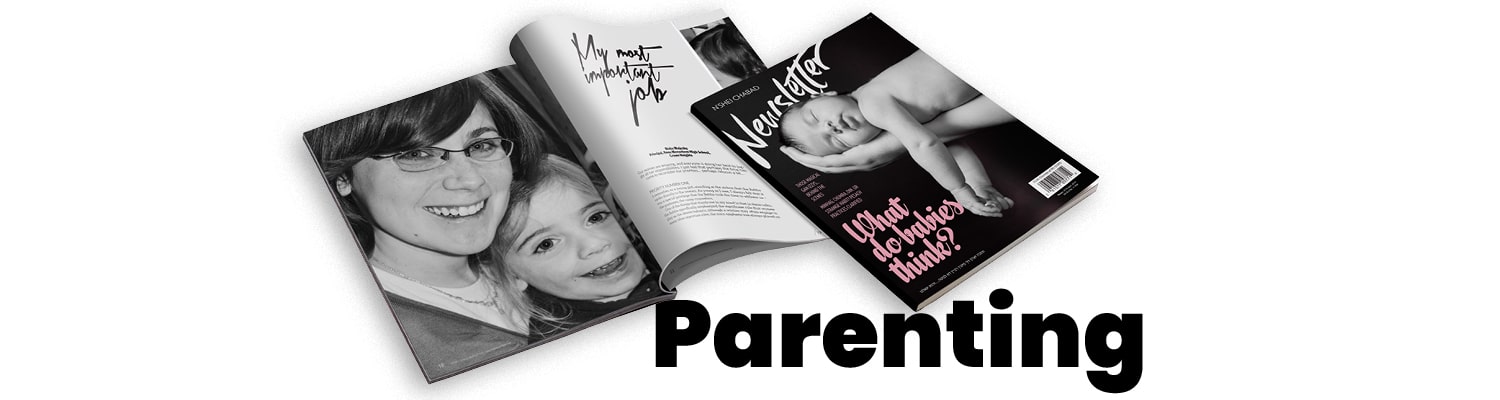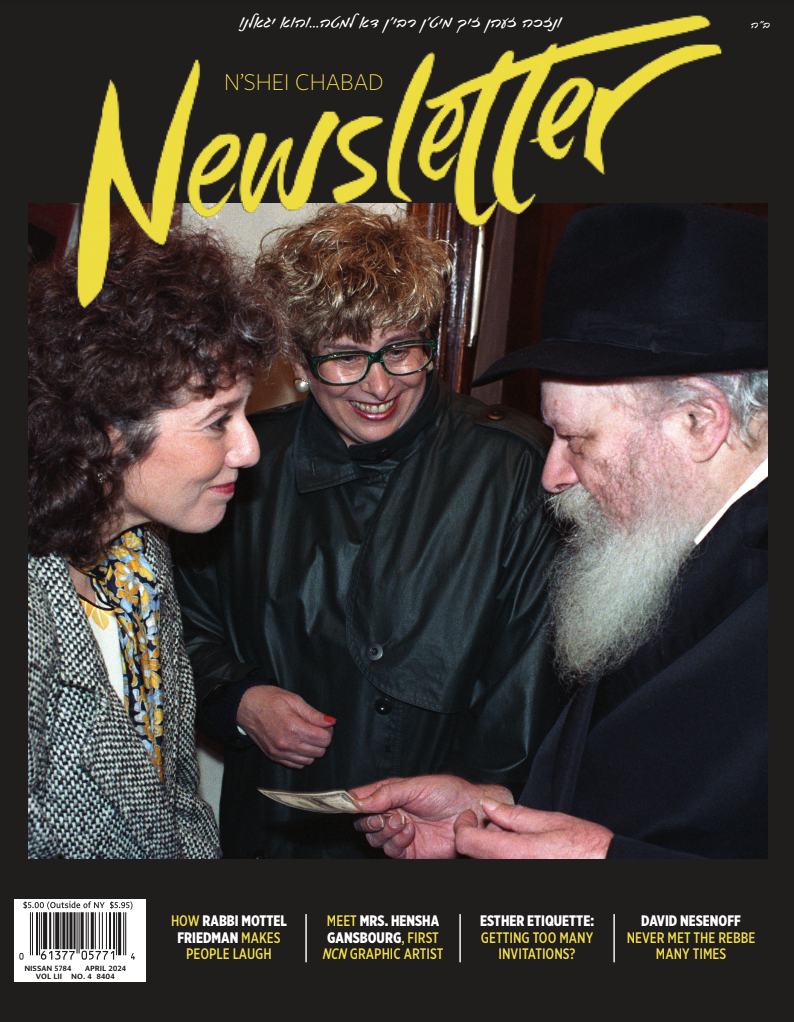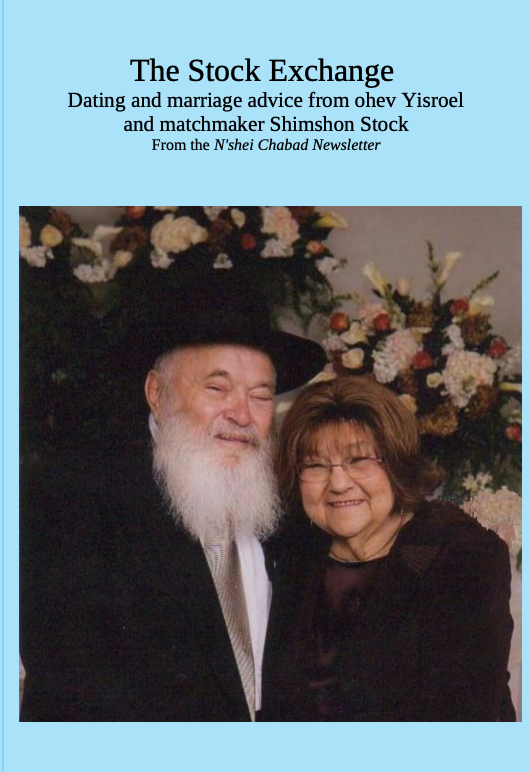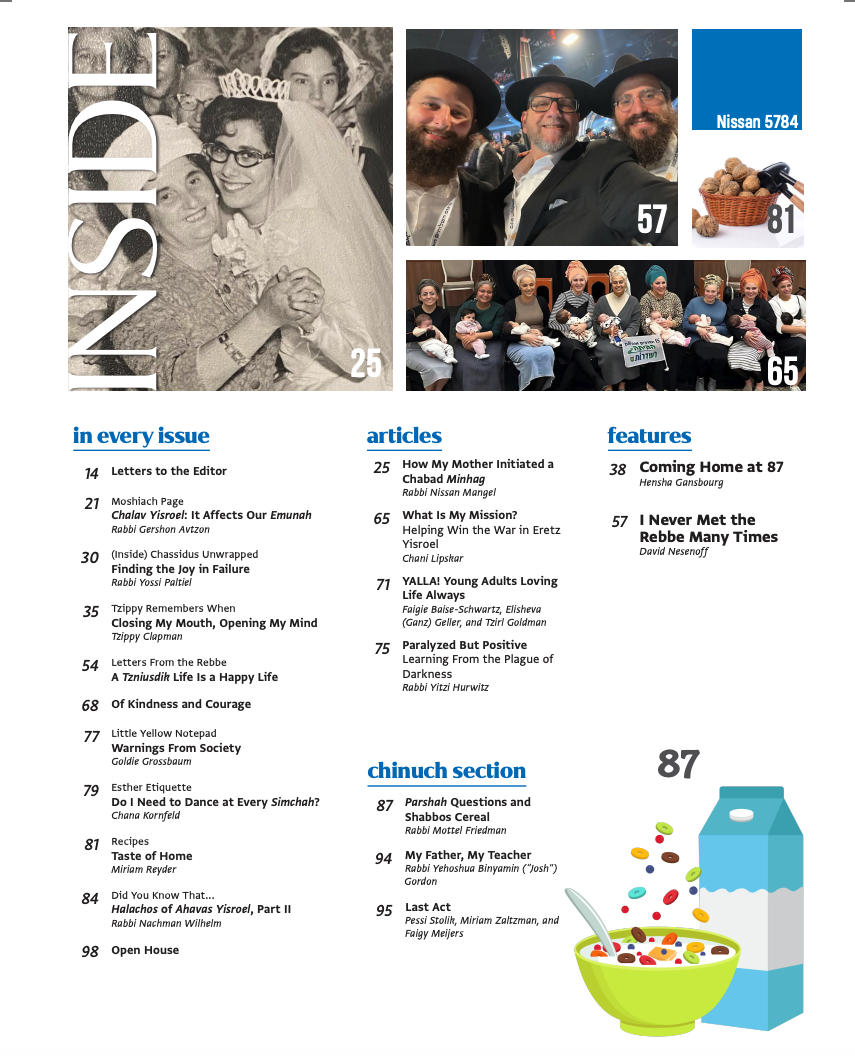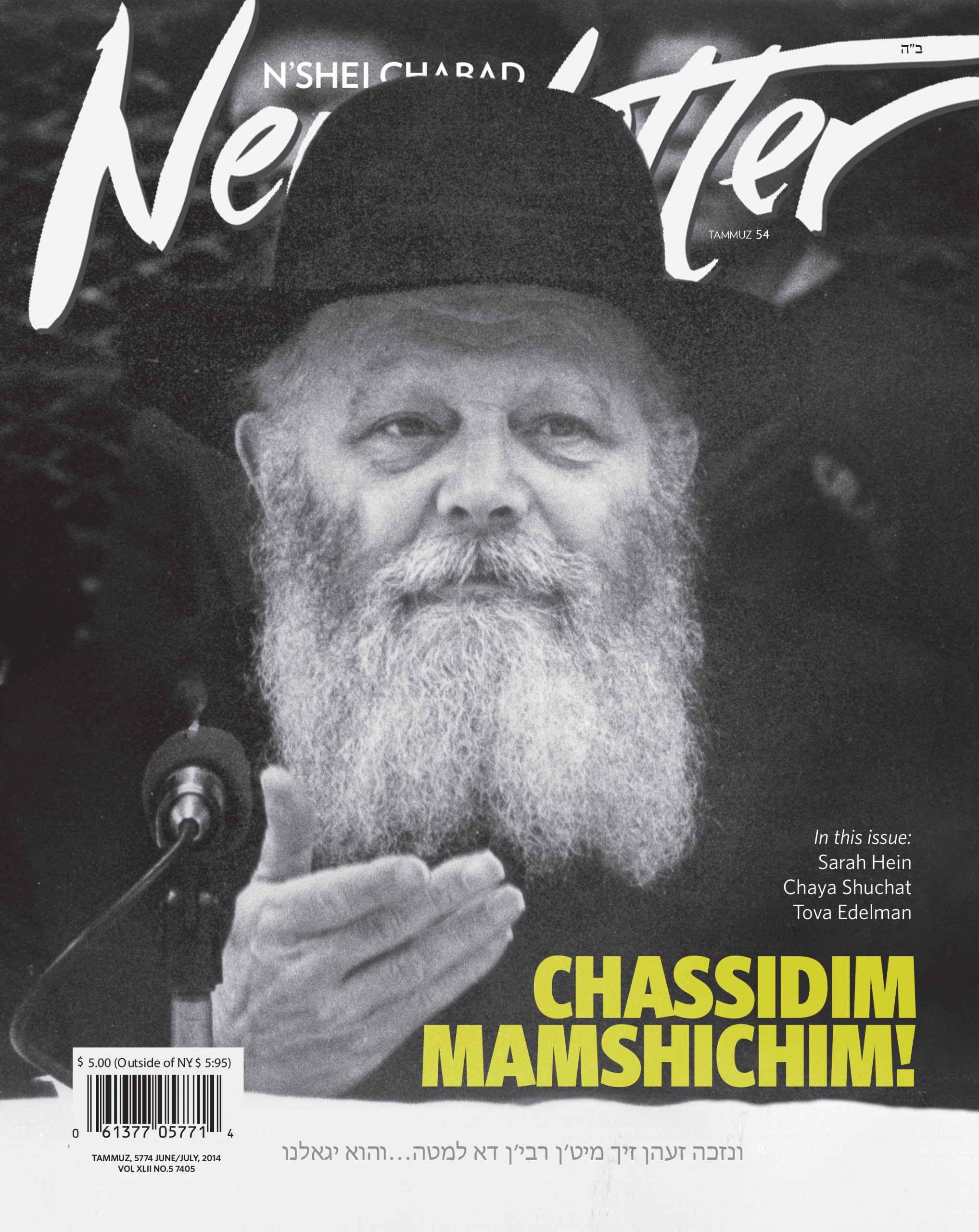
N'shei Chabad Newsletter has been inspiring women around the world for over 35 years. The magazine is published five times a year and is packed with 100 pages of stories, biographies, divrei Torah, profiles of Shluchim, parenting and health advice and Chabad history.
Click here to read what Binah has to say about the N'shei Chabad Newsletter!
Watch Helen Thomas sharing her feelings aout Jews and Eretz Yisroel. (Full article to appear in Tammuz/June 2013 issue):
and receive the N'shei Chabad Newsletter to your home.
ALEF IS FOR APPLE (310) 409-6268
BOYTIQUE 718-221-9939
RABBI BURSTON’S TAPES 323.939.2534
RABBI GOLDSTEIN CD’S
HAMAFITZ JUDAICA 718.774.0900
HYDROCHIC 866-473-7933
JUDAICA WORLD 888-2-JUDAIC
KEHOS 877-4-MERKOS
LEVI LIBEROW PHOTOGRAPHY 718-774-7777
MALCHUS LEARNING CENTER +972 52 535 1712
MASTERMIND 800-650-7210
MILANO SHEITELS 888-MILANO-3
MIMULO FLORIST 718.928.7325
ROYAL ENGRAVING 718-774-6666
SHAINDEL ANTELIS 973-202-4292
YAGDIL TORAH 347.223.5943
YESHIVAS BAIS TORAS MENACHEM 323-936-5226

In the summer of 1952, my husband and I were in the country, staying near Camp Agudah. We decided to visit the Camp Shabbos afternoon. The camp spirit during shalosh seudos was so inspiring that after Shabbos we resolved to ask the Rebbe if we could open a Lubavitcher camp. We put in a tzetel several times, each time asking for haskamah to start a camp, until the Rebbe was finally maskim. When we had organized all the basic requirements to start the camp, we sent in a tzetel with two requests: to acquire a suitable property, and to name it Camp Emunah. Boruch Hashem, the Rebbe gave his blessing to both these proposals. We decided to open a girls’ camp because we thought girls would be easier to manage than boys. (We would later learn, however, that running a girls’ camp is actually more difficult in almost every way.) In the summer of 1953, with the Rebbe’s brachah and haskamah, we started the first ever Lubavitcher overnight camp.
In honor of the 60th anniversary since the founding of Camp Emunah, N'shei Chabad Newsletter is pleased to present an exclusive interview with Rebbetzin Chave Hecht, giving us a fascinating glimpse into the early years of Camp Emunah as well as the Hechts' unique relationship with the Rebbe.

In the summer of 1964, when I was approaching my 24th birthday, I was zocheh to a birthday yechidus with the Rebbe. I was anxious to use this opportunity to request a brachah for my forthcoming Merkos Shlichus to Scandinavia.
At a Shavuos farbrengen prior to this yechidus, the Rebbe had cried bitter tears about the matzav of the Jews still suffering religious oppression behind the Iron Curtain and the apparent lack of concern for their welfare even among his own chassidim, who had neglected even to say l'chaim on their behalf.
This sichah generated much discussion among the bochurim, with many ideas how to help those locked behind the iron curtain, as well as ease the Rebbe’s pain. Just before I entered Gan Eden Hatachton, my good friend Reb Bentzion Shaffran approached me with a map of Scandinavia and Russia. He pointed out that Helsinki, Finland, is a mere five-hour train ride to S. Petersburg, Russia, and recommended that I should suggest to the Rebbe that I would be willing to go to Russia on Shlichus as well. Apparently my chaverim decided that I had the proper qualifications to accomplish this: I was an American citizen, I had a good memory, and was known not to have much interest in food.
During the yechidus, the Rebbe spoke to me at length about the Shlichus to Scandinavia and stressed the importance of explicitly following the directives of the head Shliach, Rabbi Ezriel Chaikin. Rabbi Chaikin understood the mentality of the Scandinavian Jews, and his sage advice and instructions would ensure the success of my Shlichus. When I sensed that the Rebbe was about to give me his holy brachah for hatzlachah, thus concluding the yechidus, I pulled out the map and told the Rebbe that I was willing to undertake a Shlichus to Russia. The Rebbe asked me what I would do there and I answered, “Whatever the Rebbe wishes.”
The Rebbe looked at me, smiled, and said to first go to Scandinavia and work with Rabbi Chaikin, who has a wealth of experience. He told me to concentrate only on the Scandinavian Shlichus and to be successful there. And about Russia, the Rebbe said, “Who knows what will be?”
I remained in Scandinavia over Yom Kippur. After Yom Kippur, Rabbi Chaikin told me that a letter had come for me from the Rebbe. All that it contained was a brachah written in roshei teivos four words, “rotzo v'shuv behatzlachah rabbah,” meaning to go and return with great success.
I never received anything else directly from the Rebbe regarding the trip to Russia.
I immediately understood the significance of the letter. After Yom Tov I had a meeting with Rabbi Chaikin concerning the details of the forthcoming trip to Russia: which cities to visit, accommodations, etc. Every detail was worked out and I never asked Rabbi Chaikin who gave him the information.
I received instructions regarding the trip from various sources. Among the instructions that I received were the following: Never drink any mashkeh, even if it is offered to you by other Jews and everyone else is drinking. Never enter the home of a Jew thinking the authorities will not find out. Take hot showers before you go to sleep to make you drowsy. If you feel you cannot sleep at night, make it appear as if you slept, so that the maid in the hotel will not report that you had a sleepless night. Never tell anyone when you are leaving from one city to another. Have something warm to drink every day. Try to be noticed in public gatherings in the shul by attempting to lead the davening as a chazzan and by attending shiurim, so that the people will recognize that you have a Torah background. Stay in shul as much as possible, for only there will you be able to gather information. Be alert at all times; the officers in the shul are not to be trusted. Never ask the police for help or information. Never speak off the cuff; think carefully before speaking. Better to answer a question with a nod of the head rather than a verbal response.
For nearly half a century Rabbi Binyamin Katz kept mum about the details of his trip to Russia, so as not to endanger Jews left behind the Iron Curtain. Finally he decides to share the story for future generations, in an exclusive article for the N'shei Chabad Newsletter.

Although I have never truly made an entire Pesach on my own yet (thanks, Ma!), for many years I have watched my amazing mother whip it up while keeping it all together. And like all things my mother does, it looks (I know it is anything but) effortless and stress-free. I have learned a lot from watching my mother clean the house, down to every box in the storage room that gets opened once a year for the Pesach dusting, while also making time to cook all that food from scratch – food that seems it will be enough for three armies but then is never enough.
In all the years that I spent Pesach at my mother’s house, I have never heard her raise her voice, get annoyed, or say something out of anger. How, you might ask, does she manage such serenity with a large family of children and now grandchildren, guests and more guests? Honestly, I don’t know. What I do know is that the way she carries herself and interacts with others deserves its own book. But in honor of Pesach, I will share with you a few tips I have learned from watching her that may help you bring out the best in yourself and those around you, and in turn ease some of the pre-Pesach stress.
1. My mother compliments her housekeeper. A lot. Especially during hectic times. She makes sure to acknowledge the chaos in the house and the increased workload, and frequently offers the housekeeper a drink and makes sure she sits down for meals. She uses phrases like, “We are going to get this done,” which makes the housekeeper feel she is part of team rather than a lone slave. After Pesach my mother buys the housekeeper a thoughtful gift to thank her for her hard work. No wonder a few of our housekeepers have tried to convert to Judaism!
2. Everyone is given a job that is appropriate for him or her. Even the little children are given a task that they can accomplish and feel good about, whether it is standing on a chair and peeling a potato (for an hour), or washing down the kitchen chairs outside with the hose in bathing suits. This keeps everyone busy and out of mess-making activities.
3. In the morning my mother greets us with a big smile and a big breakfast. There is always ready-to-eat food out, so no-one is ever hungry and grumpy.
In Esther Etiquette's popular column she dispenses her wise, warm and witty advice to eager readers. Finally, EE shares the secret behind her uncanny common sense and wisdom -- her exceptional mother. Read more in the Pesach issue of the N'shei Chabad Newsletter!